

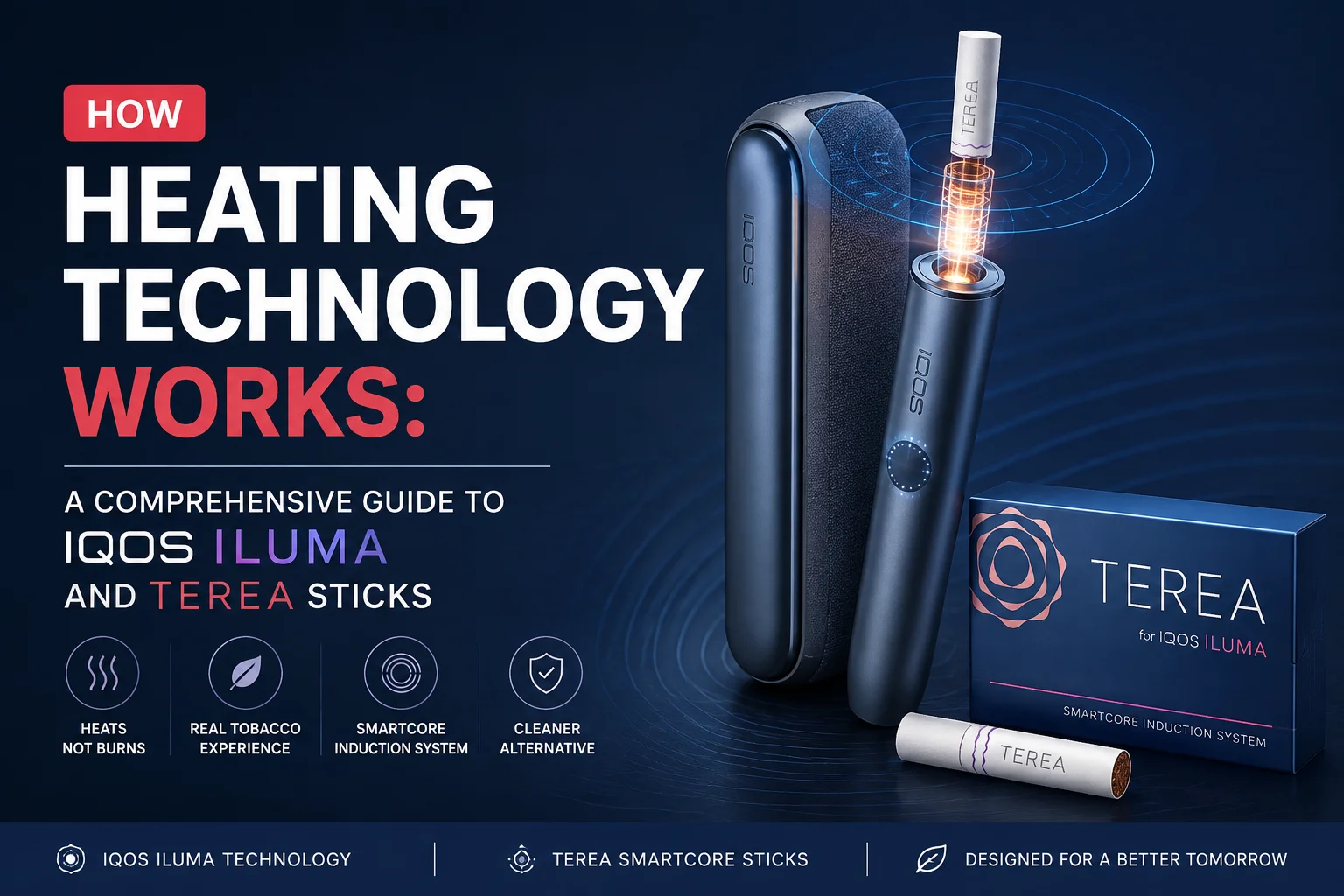
Watch someone use a modern heated tobacco device for the first time and you’ll probably notice what’s missing before you notice what’s there. No flame. No ash. No little blade sliding into anything. It looks almost too simple, and that simplicity is actually the interesting part.
There’s a real reason these devices work the way they do now, and it comes down to a shift in how the heat itself gets generated. Once you understand that shift, the whole “make sure your stick matches your device” advice stops sounding like a marketing line and starts making a lot more sense.
Why Blades Fell Out of Favor
Older heated tobacco devices used a thin metal blade that physically pushed into the tobacco stick. Heat the blade, and the blade heats the tobacco around it. Simple concept, and for a while it was the industry standard.
But anyone who used one of those early devices for more than a few weeks knows the annoyance that came with it. The blade needed cleaning, often. Skip a cleaning session and you’d start tasting it. Over time the blade would wear down too, and a bent or damaged blade usually meant the whole device stopped working properly.
So at some point, engineers asked the obvious question: does the heat source actually need to touch the tobacco at all?
The Move to Induction Heating
Turns out, no. That question is basically what led to induction heating, which is what powers the newer generation of devices on the market today. Instead of a blade making physical contact, there’s an induction coil built into the holder itself.
Here’s roughly what happens when you use one:
- The stick itself contains a small metal element rather than the device relying on a blade.
- Insert the stick, switch the device on, and it generates an electromagnetic field around that element.
- The metal heats up through induction — no contact needed.
- Heat spreads through the tobacco, releasing vapor without any burning involved.
No blade means nothing digging into the tobacco, nothing to scrub out after every use, and nothing mechanical wearing down session after session. It’s a quieter kind of engineering win, but it adds up.
Does It Actually Taste Different?
Honestly, yes, and this is where induction heating earns its keep. With a blade system, tobacco closer to the blade heats faster than tobacco further away. That uneven heating shows up as inconsistency in flavor, especially toward the last few draws.
Induction heating, when it’s done properly, spreads warmth more evenly through the material because the heating element isn’t concentrated at one contact point. People who’ve switched from blade devices to induction ones tend to describe the whole session as smoother, start to finish, without that noticeable dip in flavor near the end.
Is it night and day? Not always. But it’s a real, noticeable improvement for a lot of users, and it’s not just marketing talk.
Compatibility Isn’t Optional Here
This is the part that trips people up. Because the metal heating element usually lives inside the stick itself in induction systems, sticks aren’t universally interchangeable the way you might expect.
The stick’s metal component has to line up correctly with the specific induction coil in your device. Get that pairing wrong, and you’re looking at a stick that either heats poorly or doesn’t heat at all. There’s no forcing it.
That’s precisely why sticks like iqos terea exist as their own dedicated product line, built specifically for devices designed around induction heating rather than the older blade mechanism. It’s not brand loyalty for its own sake — it’s the physics of how the thing actually heats.
A Quick Checklist Before You Buy
If you’re shopping for a device, or just restocking, it’s worth pausing before you grab whatever’s on the shelf. A few things worth checking first:
- Know which generation of device you actually own before buying sticks for it.
- Pay attention to regional variants, since flavor and blend selection can differ depending on where you’re shopping.
- Store your sticks somewhere reasonably dry and cool — humidity does mess with how tobacco heats.
And if you’re specifically running one of the newer induction-based holders, look for iluma terea sticks rather than anything designed for the older blade generation. They might look similar sitting next to each other on a shelf, but they’re built for two different heating mechanisms entirely.
What You Actually Gain From Going Blade-Free
Beyond the flavor argument, there are a few practical upsides that don’t get talked about as much.
Cleaning becomes less of a chore. Without a blade dragging through tobacco every session, there’s simply less residue building up inside the holder.
You also lose one entire failure point. Bent or broken blades used to be a common complaint — insert a stick slightly wrong and you could damage it. Induction systems sidestep that problem completely since there’s no blade to bend in the first place.
None of this makes induction heating perfect, to be clear. Devices still need to be charged properly, sticks still need decent storage conditions, and build quality still varies from one manufacturer to another. But as far as heating methods go, it solves a handful of genuine annoyances that blade systems never quite figured out.
The Bottom Line
Heated tobacco tech isn’t a one-size-fits-all category anymore, and it hasn’t been for a while. Induction heating changed the underlying engineering, and that means the relationship between your device and your sticks matters more than it used to.
If you’re new to this or switching from an older device, take the five minutes to confirm exactly what generation of hardware you’re holding before you stock up on sticks. It’s a small step that saves you a genuinely disappointing first session.
Knowing how this stuff actually works isn’t just trivia. It changes what you look for on the shelf, and it explains why that small print about compatibility on the packaging is worth reading instead of skipping.